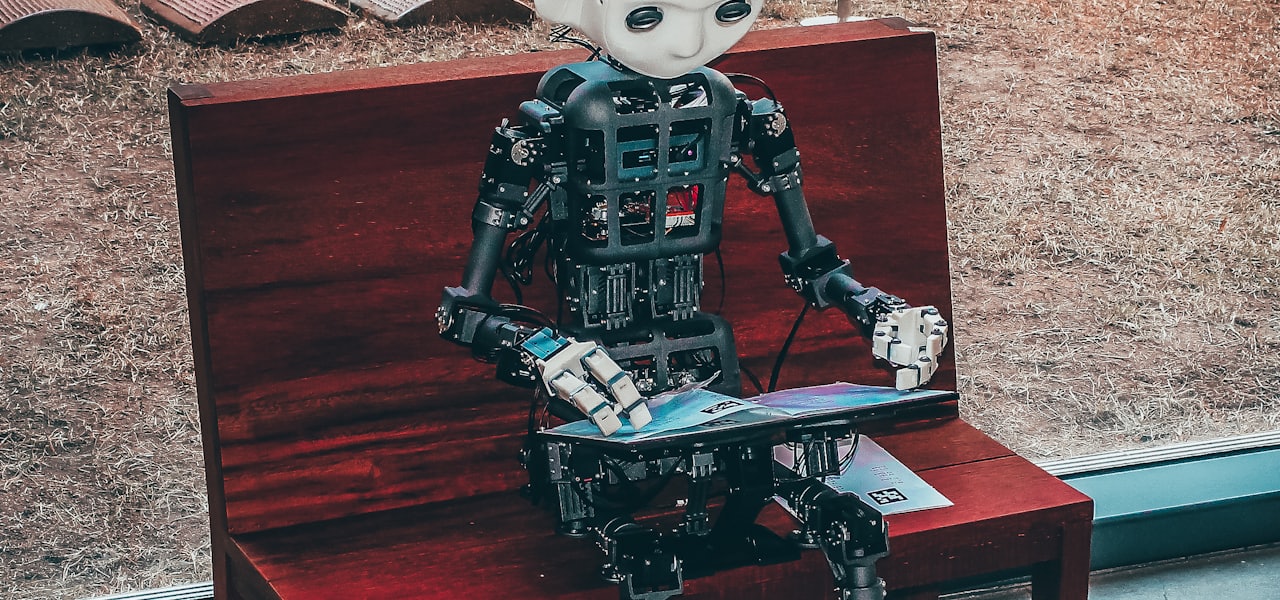
The Short Weather Cipher (German: Wetterkurzschlüssel, abbreviated WKS), also known as the weather short signal book, was a cipher, presented as a codebook, that was used by the radio telegraphists aboard U-boats of the German Navy (Kriegsmarine) during World War II. It was used to condense weather reports into a short 7-letter message, which was enciphered by using the naval Enigma and transmitted by radiomen to intercept stations on shore, where it was deciphered by Enigma and the 7-letter weather report was reconstructed. == History == During World War II, during various times, different versions of the cipher were in operation. The first issue carried the codename Weimar. It was replaced by the edition Eisenach on 20 January 1942. On 10 March 1943, the third edition of the weather key, bearing the codename Naumburg, entered into force. On May 9, 1941, during Operation Primrose, the operation to occupy Åndalsnes and create a diversion south of Trondheim in Norway as part of the Norwegian Campaign, an intact Naval Enigma (M3) cipher machine, a copy of the "Weimar" version of the short weather cipher and a copy of the short signal book (German: Kurzsignalbuch or Kurzsignale for short) was recovered from the submarine U-110, that was captured in the North Atlantic east of Cape Farewell, Greenland. This enabled the cryptanalysts in Bletchley Park to break the encryption of the M3 and to decipher the German submarine radio messages. The Short Weather Cipher was critical in the cryptanalysis of the Naval Enigma M4 and yielded excellent cribs. On 30 October 1942, a copy of the Wetterkurzschlüssel, the short weather cipher, and of the short signal book, the Kurzsignale, were recovered as part of a daring raid on the U-boat U-559, when three Royal Navy sailors, Lieutenant Anthony Fasson, Able Seaman Colin Grazier and NAAFI canteen assistant Tommy Brown, then boarded the abandoned submarine, and recovered the documents after a 90-minute search. They reached the Government Code and Cypher at Bletchley Park after a three-week delay, on 24 November 1942. The documents which cost the lives of Fasson and Grazier proved to be particularly important in breaking the Naval Enigma M4. The version of the short weather cipher recovered was the Eisenach version. Unlike the first version Weimar, the Eisenach did not list the 26 rotor positions that were indicated by a letter, to be used in enciphering weather reports. Thus, Hut 8 cryptanalysts thought that all four rotors were used to encipher weather reports. Testing on the Bombes began to surface weather kisses (identical messages in two cryptosystems). On 13 December 1942, a crib obtained using the Short Weather Cipher gave a key with the Naval Enigma M4 rotatable Umkehrwalze (reversing roller or reflector) in the neutral position, making it equivalent to a standard Enigma and thus making B-Dienst messages potentially breakable on existing bombes. Hut 8 learned that the 4-letter indicators for regular U-boat messages were the same as 3-letter indicators for weather messages the same day, except for one extra letter. This meant that once the key was found for a weather message on any day, the fourth rotor had to be only tested in 26 positions to find the full 4-letter key. By the end of the day on Sunday 13 December, Rodger Winn of the Submarine Tracking Room at Bletchley Park knew that Shark Enigma Cipher was broken. When the third edition of the short signal book was introduced on 10 March 1943, Hut 8 was immediately deprived of cribs. However, by the 19 March, cribs were again being used by Hut 8 personnel, using the method of employing short signal sighting reports. These were reports made by U-boats when contact was made with Kurzsignalheft code book. Hut 8 managed to solve Shark for 90 out of 112 days before the end of June. Kurzsignalheft short sighting reports also used M4 in M3 mode. By the end of June, four-rotor bombes had entered service at Bletchley Park, and by August had been introduced by the US Navy. From September onwards, Shark was generally solved within 24 hours. == Operation == The U-boat encoded weather reports using the Short Weather Cipher, before being enciphered on the Naval Enigma. The shore patrol of the Kriegsmarine, deciphered the message and decoded it, then forwarding it to a central meteorological station, which rebroadcast the data as ship synoptics, after enciphering it with additive tables using a cipher, which was called Germet 3 by Hut 8 personnel. The short weather cipher coded weather reports using a polyphonic single-letter code with X missing. A = +28° ◦ B = +27° ◦ C = +26° ◦ D = +25° ◦ . . . ◦ W = +6° ◦ Y= +5° ◦ Z = +4° ◦ A = +3° ◦ B = +2° ◦ C = +1° ◦ D = 0° ◦ E =−1° ◦ F =−2° ◦ . . . ◦ Z = −21° ◦ In a similar way, water temperature, atmospheric pressure, humidity, wind direction, wind velocity, visibility, degree of cloudiness, geographic latitude, and geographic longitude had to be coded in a prescribed order with the weather report consisted of a single short word. Based on the approximate knowledge of the position of the submarine, the Kriegsmarine telegraphist who received the message could translate the letter "S", according to the above table, which could mean 10 °C or −15 °C, back to the correct temperature. Similarly, the direction and the type of swell was also coded with only a single letter: ----------------------------------------------------- Direction from which | Type of swell the swell comes | low | middle high | high | ----------------------------------------------------- N | a | i | q | NE | b | j | r | E | c | k | s | SE | d | l | t | S | e | m | u | SW | f | n | v | W | g | o | w | NW | h | p | x | No swelling | | | | y Intermittent | | | | z As an example of the cipher, a weather report for 68° North latitude, 20° West longitude (north of Iceland) with atmospheric pressure 972 millibars, temperature minus 5 °C, wind northwest Force 6 (on the Beaufort scale), 3/10 cirrus cloud cover, visibility 5 nautical miles, would be coded as MZNFPED. == Publications == Bauer, Arthur O. (1997), Funkpeilung als alliierte Waffe gegen deutsche U-Boote 1939–1945 [Direction finding as Allied weapon against German submarines from 1939 to 1945] (in German), Diemen, NL: Selbstverlag, ISBN 978-3-00-002142-8 Bauer, Friedrich L. (2007), Decrypted Secrets. Methods and Maxims of Cryptology (4., rev. and extended ed.), Berlin Heidelberg New York: Springer, ISBN 978-3-540-24502-5 Pfeiffer, Paul N. (October 1998), "Breaking the German Weather Ciphers in the Mediterranean Detachment, 849th Signal Intelligence Service", Cryptologia, 22 (4): 354–369, doi:10.1080/0161-119891886975, ISSN 0161-1194 Ulbricht, Heinz (2005), Die Chiffriermaschine Enigma – Trügerische Sicherheit. Ein Beitrag zur Geschichte der Nachrichtendienste [The Enigma cipher machine – Deceptive security. A contribution to the history of the intelligence services], Dissertation, Fachbereich Mathematik und Informatik, Technische Universität Braunschweig (in German)
Weak artificial intelligence
Weak artificial intelligence (weak AI) is artificial intelligence that implements a limited part of the mind, or, as narrow AI, artificial narrow intelligence (ANI), is focused on one narrow task. Weak AI is contrasted with strong AI, which can be interpreted in various ways: Artificial general intelligence (AGI): a machine with the ability to apply intelligence to any problem, rather than just one specific problem. Artificial superintelligence (ASI): a machine with a vastly superior intelligence to the average human being. Artificial consciousness: a machine that has consciousness, sentience and mind (John Searle uses "strong AI" in this sense). Narrow AI can be classified as being "limited to a single, narrowly defined task. Most modern AI systems would be classified in this category." Artificial general intelligence is conversely the opposite. == Applications and risks == Some examples of narrow AI are AlphaGo, self-driving cars, robot systems used in the medical field, and diagnostic doctors. Narrow AI systems are sometimes dangerous if unreliable. And the behavior that it follows can become inconsistent. It could be difficult for the AI to grasp complex patterns and get to a solution that works reliably in various environments. This "brittleness" can cause it to fail in unpredictable ways. Narrow AI failures can sometimes have significant consequences. It could for example cause disruptions in the electric grid, damage nuclear power plants, cause global economic problems, and misdirect autonomous vehicles. Medicines could be incorrectly sorted and distributed. Also, medical diagnoses can ultimately have serious and sometimes deadly consequences if the AI is faulty or biased. Simple AI programs have already worked their way into society, oftentimes unnoticed by the public. Autocorrection for typing, speech recognition for speech-to-text programs, and vast expansions in the data science fields are examples. Narrow AI has also been the subject of some controversy, including resulting in unfair prison sentences, discrimination against women in the workplace for hiring, resulting in death via autonomous driving, among other cases. Despite being "narrow" AI, recommender systems are efficient at predicting user reactions based on their posts, patterns, or trends. For instance, TikTok's "For You" algorithm can determine a user's interests or preferences in less than an hour. Some other social media AI systems are used to detect bots that may be involved in propaganda or other potentially malicious activities. == Weak AI versus strong AI == John Searle contests the possibility of strong AI (by which he means conscious AI). He further believes that the Turing test (created by Alan Turing and originally called the "imitation game", used to assess whether a machine can converse indistinguishably from a human) is not accurate or appropriate for testing whether an AI is "strong". Scholars such as Antonio Lieto have argued that the current research on both AI and cognitive modelling are perfectly aligned with the weak-AI hypothesis (that should not be confused with the "general" vs "narrow" AI distinction) and that the popular assumption that cognitively inspired AI systems espouse the strong AI hypothesis is ill-posed and problematic since "artificial models of brain and mind can be used to understand mental phenomena without pretending that that they are the real phenomena that they are modelling" (as, on the other hand, implied by the strong AI assumption).
Data drilling
Data drilling (also drilldown) refers to any of various operations and transformations on tabular, relational, and multidimensional data. The term has widespread use in various contexts, but is primarily associated with specialized software designed specifically for data analysis. == Common data drilling operations == There are certain operations that are common to applications that allow data drilling. Among them are: Query operations: tabular query pivot query === Tabular query === Tabular query operations consist of standard operations on data tables. Among these operations are: search sort filter (by value) filter (by extended function or condition) transform (e.g., by adding or removing columns) Consider the following example: Fred and Wilma table (Fig 001): gender, fname, lname, home male, fred, chopin, Poland male, fred, flintstone, bedrock male, fred, durst, usa female, wilma, flintstone, bedrock female, wilma, rudolph, usa female, wilma, webb, usa male, fred, johnson, usa The preceding is an example of a simple flat file table formatted as comma-separated values. The table includes first name, last name, gender and home country for various people named fred or wilma. Although the example is formatted this way, it is important to emphasize that tabular query operations (as well as all data drilling operations) can be applied to any conceivable data type, regardless of the underlying formatting. The only requirement is that the data be readable by the software application in use. === Pivot query === A pivot query allows multiple representations of data according to different dimensions. This query type is similar to tabular query, except it also allows data to be represented in summary format, according to a flexible user-selected hierarchy. This class of data drilling operation is formally, (and loosely) known by different names, including crosstab query, pivot table, data pilot, selective hierarchy, intertwingularity and others. To illustrate the basics of pivot query operations, consider the Fred and Wilma table (Fig 001). A quick scan of the data reveals that the table has redundant information. This redundancy could be consolidated using an outline or a tree structure or in some other way. Moreover, once consolidated, the data could have many different alternate layouts. Using a simple text outline as output, the following alternate layouts are all possible with a pivot query: Summarize by gender (Fig 001): female flintstone, wilma rudolph, wilma webb, wilma male chopin, fred flintstone, fred durst, fred johnson, fred (Dimensions = gender; Tabular fields = lname, fname;) Summarize by home, lname (Fig 001): bedrock flintstone fred wilma Poland chopin fred usa ... (Dimensions = home, lname; Tabular fields = fname;) ==== Uses ==== Pivot query operations are useful for summarizing a corpus of data in multiple ways, thereby illustrating different representations of the same basic information. Although this type of operation appears prominently in spreadsheets and desktop database software, its flexibility is arguably under-utilized. There are many applications that allow only a 'fixed' hierarchy for representing data, and this represents a substantial limitation. == Drillup == Drillup is the opposite of drilldown. For example, if you drilldown to see the revenue of one product, then you might want to drillup to see the revenue of all products.
Ecoinformatics
Ecoinformatics, or ecological informatics, is the science of information in ecology and environmental science. It integrates environmental and information sciences to define entities and natural processes with language common to both humans and computers. However, this is a rapidly developing area in ecology and there are alternative perspectives on what constitutes ecoinformatics. A few definitions have been circulating, mostly centered on the creation of tools to access and analyze natural system data. However, the scope and aims of ecoinformatics are certainly broader than the development of metadata standards to be used in documenting datasets. Ecoinformatics aims to facilitate environmental research and management by developing ways to access, integrate databases of environmental information, and develop new algorithms enabling different environmental datasets to be combined to test ecological hypotheses. Ecoinformatics is related to the concept of ecosystem services. Ecoinformatics characterize the semantics of natural system knowledge. For this reason, much of today's ecoinformatics research relates to the branch of computer science known as knowledge representation, and active ecoinformatics projects are developing links to activities such as the Semantic Web. Current initiatives to effectively manage, share, and reuse ecological data are indicative of the increasing importance of fields like ecoinformatics to develop the foundations for effectively managing ecological information. Examples of these initiatives are National Science Foundation Datanet projects, DataONE, Data Conservancy, and Artificial Intelligence for Environment & Sustainability. == Software Development Lifecycle == Central to the concept of ecoinformatics is the Software Development Lifecycle (SDLC), a systematic framework for writing, implementing, and maintaining software products. Typically in Ecoinformatics projects, the development pipeline includes data collection, usually from several different environmental data sources, then integrating these data sources together, and then analyzing the data. Here, each step of the SDLC is described in the context of ecoinformatics, per Michener et al. It is important to note that the plan, collect, assure, describes and preserve steps refer to the data collection entity, which can be individual researchers or large data-collection networks, while the discover, integrate, and analyze steps typically refer to the individual researcher. Plan: Ecoinformatics projects require data from several databases. Each database holds different data, and therefore researchers should identify what types of environmental or ecological data they will need to answer their research question. Collect: Data is collected in several different ways. In ecoinformatics, this is usually restricted to manually entering data into a spreadsheet, and parsing data from an existing database. The growth of relational databases has made it easier for ecologists to download relevant data and integrate datasets together Assure: Data entries should be checked thoroughly to validate their accuracy and usability, such as to check for outliers and erroneous points. The same principle applies to data downloaded from datasets. This responsibility falls on both the ecologist downloading the data, and the entity that sets up the data collection system. Describe: An accurate description of the metadata of a dataset that is used in a study should include enough information to deduce the data collection and processing methodology, when the data were collected, why the data were collected, and how the data were stored. This is important for reproducibility, especially for projects that build on each other and may recycle data Preserve: After data is collected by an institutional entity, it should be archived such that it is easily accessible. Ideally, this is in databases that are maintained and not at risk of deprecation Discover: While there are good practices for discovering data to start a research project, this process is often marred by a lack of usable, published data, as researchers may collect data specific to their study, but may not publish this data for wider use. On the data collection end, this can be addressed by better data-sharing practices, such as by linking datasets when publishing papers or studies. On the data procurement end, this can be addressed by more precise data searching, such as using key words to find relevant datasets. Integrate: Synthesizing datasets together can be difficult and labor-intensive, largely due to the methodological differences in data collection. There are several approaches to this, but the best practices typically involve computational approaches, namely using R or Python, to automate the processes and prevent errors Analyze: Data analysis can take several forms, and should be tailored to the specific ecological project. However, all data analysis methods should be well-documented, including the procedure for analysis, justification for analysis methods, and any shortcomings in a specific approach. == Applications of Ecoinformatics Across Ecology == === Ecosystem Ecology === Source: Ecosystem studies, by definition, encompass interactions across the entire life sciences spectrum, from microscopic biochemical reactions to large-scale geological phenomena. As a result, big databases may not be designed specifically for any particular research question, but should be inclusive enough to support most studies. Since ecosystem-level questions require a broad perspective, data-related ecosystem projects would likely incorporate data from several databases. A common framework for incorporating data into ecosystem-level studies is the network science model, in which data collection mechanisms and resources are treated like a large, interconnected network instead of individual entities. The network may include several data collection stations within one databases, or may span across multiple databases. Currently there are several large-scale networks, but they do not generate data on the scale to consider ecology as a big data science. A current challenge for ecoinformatics in ecosystem ecology is that most funding is prioritized for generating new data rather than maintaining existing data infrastructures. Integrating data across the different spatial scales can also be difficult, since each dataset may hold different types of data. === Urban Ecology === Source: The current push for smart cities, and sensor network integration into infrastructure, has positioned as a major source of data for ecological studies. Typical urban ecology questions address the effects of urbanization on the local ecosystem, and how to drive future development to promote urban biodiversity. While sensor networks in cities typically collect environmental data to optimize city processes, they may also be used for ecological initiatives, especially with respect to understanding the complex, multi-layered relationship between cities and their local ecosystem. It can also be used to better understand the current landscape of cities, and identify avenues for rewinding of cities. For example, analyzing mobility patterns can identify areas that may lend themselves well to building parks and green spaces. Bird watching data can also be used to identify the types of bird species in a local area. === Infectious Disease === Source: Like other disciplines of ecology, emerging infectious disease and epidemiology span multiple scales, from understanding the genetics that drive disease trends to large-scale spatiotemporal analyses. As a result, infectious disease studies can incorporate everything from bioinformatics, genetic sequences, amino acid sequences, and environmental observation data. On the micro-scale, these data can then be used to predict infectivity/transmissibility, drug resistance, drug candidates, and mutation sites. On the macro-scale, it can be used to identify societal trends or environmental factors that lend themselves to spillover, locations of infection, and practices that cause disease transmission. == Databases == Source: USGS National Streamflow sensor network GBIF Neotoma Paleobiology database European Vegetation Archive USDA Forest Inventory Analysis TRY BIEN AmeriFlux TEAM iNaturalist NEON GLEON LTER CZO TERN SAEON
Virtual data room
A virtual data room (sometimes called a VDR or Deal Room) is an online repository of information that is used for the storing and distribution of documents. In many cases, a virtual data room is used to facilitate the due diligence process during an M&A transaction, loan syndication, or private equity and venture capital transactions. This due diligence process has traditionally used a physical data room to accomplish the disclosure of documents. For reasons of cost, efficiency and security, virtual data rooms have widely replaced the more traditional physical data room. A virtual data room is an extranet to which the bidders and their advisers are given access via the internet. An extranet is essentially a website with limited controlled access, using a secure log-on supplied by the vendor, which can be disabled at any time, by the vendor, if a bidder withdraws. Much of the information released is confidential and restrictions are applied to the viewer's ability to release this to third parties (by means of forwarding, copying or printing). This can be effectively applied to protect the data using digital rights management. The virtual data room provides access to secure documents for authorized users through a dedicated web site, or through secure agent applications. In the process of mergers and acquisitions the data room is set up as part of the central repository of data relating to companies or divisions being acquired or sold. The data room enables the interested parties to view information relating to the business in a controlled environment where confidentiality can be preserved. Conventionally this was achieved by establishing a supervised, physical data room in secure premises with controlled access. In most cases, with a physical data room, only one bidder team can access the room at a time. A virtual data room is designed to have the same advantages as a conventional data room (controlling access, viewing, copying and printing, etc.) with fewer disadvantages. Due to their increased efficiency, many businesses and industries have moved to using virtual data rooms instead of physical data rooms. In 2006, a spokesperson for a company which sets up virtual deal rooms was reported claiming that the process reduced the bidding process by about thirty days compared to physical data rooms. In the process of startup fundraising, a virtual data room is set up to be a central location for key data, documents, and financials. These are shared with venture capital and angel investors and allows them to streamline due diligence. == Application == Any business dealing with private data can apply VDRs when secure transaction processing is required. This includes financial institutions that need to negotiate confidential customer information without involving third parties. VDRs have traditionally been used for IPOs and real estate asset management. Technology companies may use them to exchange and review code or confidential data needed for operations. The same is true for clients, who entrust their valuable code only to the most qualified people in the organisation. The code is not something that can be printed out and brought in a folder. It resides on a computer and must be used together. VDR can find application in any business that manages data in the form of documents, especially law firms, financial advisers or the B2B sector. The latter work with documents that must always be handled and controlled confidentially, and it is difficult to store them securely when they are on a server that other people can access. In addition, in B2B, it is important to close the deal as quickly as possible: the average sales cycle is one to three months. VDR can be compared to a locked filing cabinet where all those folders and documents are kept. It automates the mathematics of pricing to prevent revenue leakage, and initially integrates CRM to ensure accurate synchronisation of all account data, which is important for B2B in particular and sales in general. While virtual data rooms offer many advantages, they are not suitable for every industry. For example, some governments may decide to continue using physical data rooms for highly confidential information sharing. The damage from potential cyberattacks and data breaches exceeds the benefits offered by virtual data rooms. In such cases, the use of VDRs is not considered. Data breaches have particularly affected the US healthcare system from March 2021 to March 2022 - according to IBM Security the cost of the breach was a record high of $10.1 million.
Pandas (software)
Pandas (styled as pandas) is a software library written for the Python programming language for data manipulation and analysis. In particular, it offers data structures and operations for manipulating numerical tables and time series. It is free software released under the three-clause BSD license. The name is derived from the term "panel data", an econometrics term for data sets that include observations over multiple time periods for the same individuals, as well as a play on the phrase "Python data analysis". Wes McKinney started building what would become Pandas at AQR Capital while he was a researcher there from 2007 to 2010. The development of Pandas introduced into Python many comparable features of working with DataFrames that were established in the R programming language. The library is built upon another library, NumPy. == History == Developer Wes McKinney started working on Pandas in 2008 while at AQR Capital Management out of the need for a high performance, flexible tool to perform quantitative analysis on financial data. Before leaving AQR, he was able to convince management to allow him to open source the library in 2009. Another AQR employee, Chang She, joined the effort in 2012 as the second major contributor to the library. In 2015, Pandas signed on as a fiscally sponsored project of NumFOCUS, a 501(c)(3) nonprofit charity in the United States. == Data model == Pandas is built around data structures called Series and DataFrames. Data for these collections can be imported from various file formats such as comma-separated values, JSON, Parquet, SQL database tables or queries, and Microsoft Excel. === Series === A Series is a one-dimensional array-like object that stores a sequence of values together with an associated set of labels, called an index. It is built on top of NumPy's array and affords many similar functionalities, but instead of using implicit integer positions, a Series allows explicit index labels of many data types. A Series can be created from Python lists, dictionaries, or NumPy arrays. If no index is provided, pandas automatically assigns a default integer index ranging from 0 to n-1, where n is the number of items in the Series. A simple example with customized labels is: To access a value or list of values from a Series, use its index or list of indices: Series can be used arithmetically, as in the statement series_3 = series_1 + series_2. This will align data points with corresponding index values in series_1 and series_2 (similar to a join in relational algebra), then add them together to produce new values in series_3. A Series has various attributes, such as name (Series name), dtype (data type of values), shape (number of rows), values, and index. They can be used in many of the same operations as NumPy arrays, with additional methods for reindexing, label-based selection, and handling missing data. === DataFrame === A DataFrame is a two-dimensional, tabular data structure with labeled rows and columns. Each column is stored internally as a Series and may hold a different data type (numeric, string, boolean, etc.). DataFrames can be created by a variety of means, including dictionaries of lists, NumPy arrays, and external files such as CSV or Excel spreadsheets: To retrieve a DataFrame column as a Series, use either 1) the index (dict-like notation) or 2) the name of column if the name is a valid Python identifier (attribute-like access). DataFrames support operations such as column assignment, row and column deletion, label-based indexing with loc, position-based indexing with iloc, reshaping, grouping, and joining. Merge operations implement a subset of relational algebra and allow one-to-one, many-to-one, and many-to-many joins. Some common attributes of a DataFrame include dtypes (data type of each column), shape (dimensions of the DataFrame returned as a tuple with form (number of rows, number of columns)), index/columns (labels of the DataFrame's rows/columns, respectively, returned as an Index object), values (data in the DataFrame returned as a 2D array), and empty (returns True if the DataFrame is empty). === Index === Index objects hold metadata for Series and Dataframe objects, such as axis labels and names, and are automatically created from input data. By default, a pandas index is a series of integers ascending from 0, similar to the indices of Python arrays. However, indices can also use any NumPy data type, including floating point, timestamps, or strings. Indices are also immutable, which allows them to be safely shared across multiple objects. pandas' syntax for mapping index values to relevant data is the same syntax Python uses to map dictionary keys to values. For example, if s is a Series, s['a'] will return the data point at index a. Unlike dictionary keys, index values are not guaranteed to be unique. If a Series uses the index value a for multiple data points, then s['a'] will instead return a new Series containing all matching values. A DataFrame's column names are stored and implemented identically to an index. As such, a DataFrame can be thought of as having two indices: one column-based and one row-based. Because column names are stored as an index, these are not required to be unique. If data is a Series, then data['a'] returns all values with the index value of a. However, if data is a DataFrame, then data['a'] returns all values in the column(s) named a. To avoid this ambiguity, Pandas supports the syntax data.loc['a'] as an alternative way to filter using the index. Pandas also supports the syntax data.iloc[n], which always takes an integer n and returns the nth value, counting from 0. This allows a user to act as though the index is an array-like sequence of integers, regardless of how it is actually defined. pandas also supports hierarchical indices with multiple values per data point through the "MultiIndex" class. MultiIndex objects allow a single DataFrame to represent multiple dimensions, similar to a pivot table in Microsoft Excel, where each level can optionally carry its own unique name. In practice, data with more than 2 dimensions is often represented using DataFrames with hierarchical indices, instead of the higher-dimension Panel and Panel4D data structures. == Functionality == pandas supports a variety of indexing and subsetting techniques, allowing data to be selected by label, index, or Boolean conditions. For example, df[df['col1'] > 5] will return all rows in the DataFrame df for which the value of the column col1 exceeds 5. The library also implements grouping operations based on the split-apply-combine approach, enabling users to aggregate, transform, or restructure data according to column values or functions applied to index labels. For example, df['col1'].groupby(df['col2']) groups the data in 'col1' by their values in 'col2', while df.groupby(lambda i: i % 2) groups all data in the whole DataFrame by whether their index is even. The library also provides extensive tools for transforming, filtering and summarizing data. Users may apply arbitrary functions to Series and DataFrames, and because the library is built on top of Numpy, most NumPy functions can be applied directly to pandas objects as well. The library also includes built-in operations for arithmetic operations, string processing, and descriptive statistics such as mean, median, and standard deviation. These built-in functions are designed to handle missing data, usually represented by the floating-point value NaN. In addition, pandas includes tools for reorganizing data into different structural formats, with methods that can reshape tabular data between "wide" and "long" formats and pivot values based on column labels. pandas also implements a flexible set of relational operations for combining datasets. For instance, merge() links row in DataFrames based on one or more shared keys or indices, supporting one-to-one, one-to-many, and many-to-many relationships in a manner analogous to join operations in relational databases like SQL. DataFrames can also be concatenated or stacked together along an axis through the concat() method, and overlapping data can be further spliced together using combine_first() to fill in missing values. Furthermore, the library includes specialized support for working with time-series data. Features include the ability to interpolate values and filter using a range of timestamps, such as data['1/1/2023':'2/2/2023'] , which will return all dates between January 1 and February 2. Missing values in time-series data are represented by a dedicated NaT (Not a Timestamp) object, instead of the NaN value it uses elsewhere. == Criticisms == Pandas has been criticized for its inefficiency. The entire dataset must be loaded in RAM, and the library does not optimize query plans or support parallel computing across multiple cores. Wes McKinney, the creator of Pandas, has recommended Apache Arrow as an alternative to address these performance concerns and ot
Record linkage
Record linkage (also known as data matching, data linkage, entity resolution, and many other terms) is the task of finding records in a data set that refer to the same entity across different data sources (e.g., data files, books, websites, and databases). Record linkage is necessary when joining different data sets based on entities that may or may not share a common identifier (e.g., database key, URI, National identification number), which may be due to differences in record shape, storage location, or curator style or preference. A data set that has undergone RL-oriented reconciliation may be referred to as being cross-linked. == Naming conventions == "Record linkage" is the term used by statisticians, epidemiologists, and historians, among others, to describe the process of joining records from one data source with another that describe the same entity. However, many other terms are used for this process. Unfortunately, this profusion of terminology has led to few cross-references between these research communities. Computer scientists often refer to it as "data matching" or as the "object identity problem". Commercial mail and database applications refer to it as "merge/purge processing" or "list washing". Other names used to describe the same concept include: "coreference/entity/identity/name/record resolution", "entity disambiguation/linking", "fuzzy matching", "duplicate detection", "deduplication", "record matching", "(reference) reconciliation", "object identification", "data/information integration" and "conflation". While they share similar names, record linkage and linked data are two separate approaches to processing and structuring data. Although both involve identifying matching entities across different data sets, record linkage standardly equates "entities" with human individuals; by contrast, Linked Data is based on the possibility of interlinking any web resource across data sets, using a correspondingly broader concept of identifier, namely a URI. == History == The initial idea of record linkage goes back to Halbert L. Dunn in his 1946 article titled "Record Linkage" published in the American Journal of Public Health. Howard Borden Newcombe then laid the probabilistic foundations of modern record linkage theory in a 1959 article in Science. These were formalized in 1969 by Ivan Fellegi and Alan Sunter, in their pioneering work "A Theory For Record Linkage", where they proved that the probabilistic decision rule they described was optimal when the comparison attributes were conditionally independent. In their work they recognized the growing interest in applying advances in computing and automation to large collections of administrative data, and the Fellegi-Sunter theory remains the mathematical foundation for many record linkage applications. Since the late 1990s, various machine learning techniques have been developed that can, under favorable conditions, be used to estimate the conditional probabilities required by the Fellegi-Sunter theory. Several researchers have reported that the conditional independence assumption of the Fellegi-Sunter algorithm is often violated in practice; however, published efforts to explicitly model the conditional dependencies among the comparison attributes have not resulted in an improvement in record linkage quality. On the other hand, machine learning or neural network algorithms that do not rely on these assumptions often provide far higher accuracy, when sufficient labeled training data is available. Record linkage can be done entirely without the aid of a computer, but the primary reasons computers are often used to complete record linkages are to reduce or eliminate manual review and to make results more easily reproducible. Computer matching has the advantages of allowing central supervision of processing, better quality control, speed, consistency, and better reproducibility of results. == Methods == === Data preprocessing === Record linkage is highly sensitive to the quality of the data being linked, so all data sets under consideration (particularly their key identifier fields) should ideally undergo a data quality assessment before record linkage. Many key identifiers for the same entity can be presented quite differently between (and even within) data sets, which can greatly complicate record linkage unless understood ahead of time. For example, key identifiers for a man named William J. Smith might appear in three different data sets as follows: In this example, the different formatting styles lead to records that look different but in fact all refer to the same entity with the same logical identifier values. Most, if not all, record linkage strategies would result in more accurate linkage if these values were first normalized or standardized into a consistent format (e.g., all names are "Surname, Given name", and all dates are "YYYY/MM/DD"). Standardization can be accomplished through simple rule-based data transformations or more complex procedures such as lexicon-based tokenization and probabilistic hidden Markov models. Several of the packages listed in the Software Implementations section provide some of these features to simplify the process of data standardization. === Entity resolution === Entity resolution is an operational intelligence process, typically powered by an entity resolution engine or middleware, whereby organizations can connect disparate data sources with a view to understand possible entity matches and non-obvious relationships across multiple data silos. It analyzes all of the information relating to individuals and/or entities from multiple sources of data, and then applies likelihood and probability scoring to determine which identities are a match and what, if any, non-obvious relationships exist between those identities. Entity resolution engines are typically used to uncover risk, fraud, and conflicts of interest, but are also useful tools for use within customer data integration (CDI) and master data management (MDM) requirements. Typical uses for entity resolution engines include terrorist screening, insurance fraud detection, USA Patriot Act compliance, organized retail crime ring detection and applicant screening. For example, across different data silos – employee records, vendor data, watch lists, etc. – an organization may have several variations of an entity named ABC, which may or may not be the same individual. These entries may, in fact, appear as ABC1, ABC2, or ABC3 within those data sources. By comparing similarities between underlying attributes such as address, date of birth, or social security number, the user can eliminate some possible matches and confirm others as very likely matches. Entity resolution engines then apply rules, based on common sense logic, to identify hidden relationships across the data. In the example above, perhaps ABC1 and ABC2 are not the same individual, but rather two distinct people who share common attributes such as address or phone number. ==== Data matching ==== While entity resolution solutions include data matching technology, many data matching offerings do not fit the definition of entity resolution. Here are four factors that distinguish entity resolution from data matching, according to John Talburt, director of the UALR Center for Advanced Research in Entity Resolution and Information Quality: Works with both structured and unstructured records, and it entails the process of extracting references when the sources are unstructured or semi-structured Uses elaborate business rules and concept models to deal with missing, conflicting, and corrupted information Utilizes non-matching, asserted linking (associate) information in addition to direct matching Uncovers non-obvious relationships and association networks (i.e. who's associated with whom) In contrast to data quality products, more powerful identity resolution engines also include a rules engine and workflow process, which apply business intelligence to the resolved identities and their relationships. These advanced technologies make automated decisions and impact business processes in real time, limiting the need for human intervention. === Deterministic record linkage === The simplest kind of record linkage, called deterministic or rules-based record linkage, generates links based on the number of individual identifiers that match among the available data sets. Two records are said to match via a deterministic record linkage procedure if all or some identifiers (above a certain threshold) are identical. Deterministic record linkage is a good option when the entities in the data sets are identified by a common identifier, or when there are several representative identifiers (e.g., name, date of birth, and sex when identifying a person) whose quality of data is relatively high. As an example, consider two standardized data sets, Set A and Set B, that contain different bits of information about patients in a hospital system. T